Clara Günther · 2 September 2026
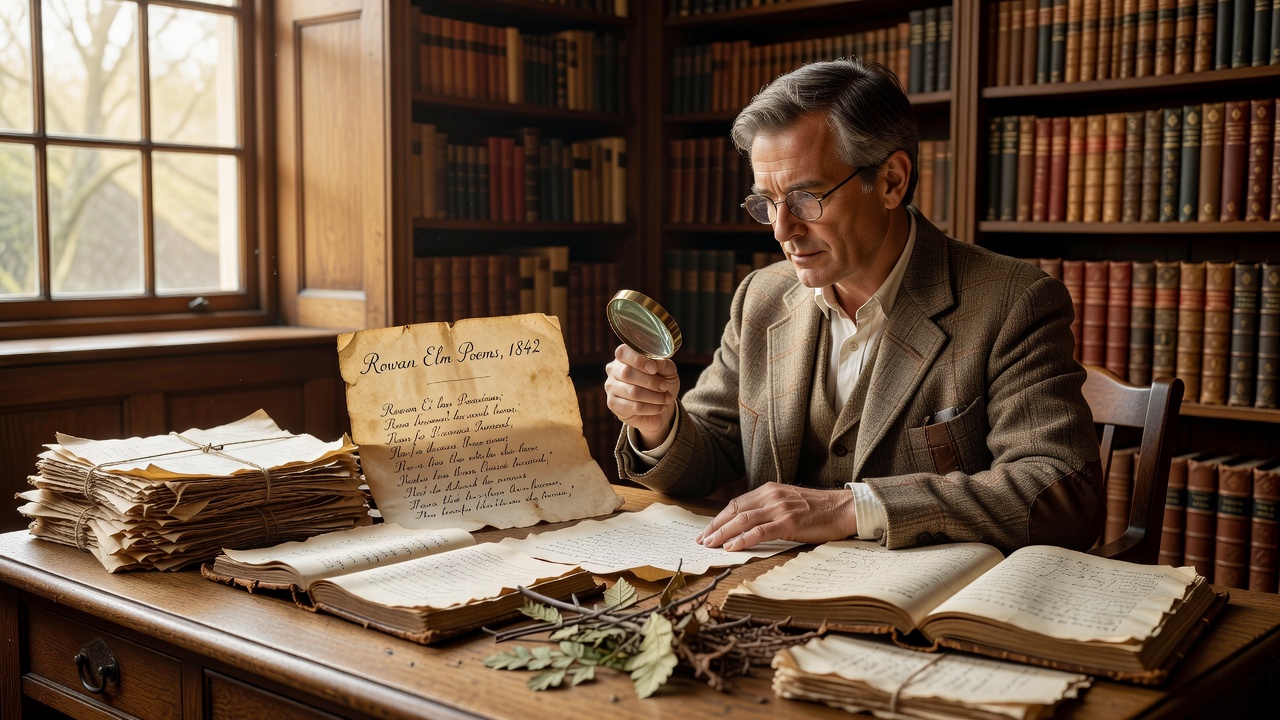
A historian has unearthed a collection of previously unknown poems from the 19th century during routine archival work at a county records office. The verses focus on the rowan and elm trees, longstanding symbols in British rural heritage and folklore. Dr. Margaret Hale, a specialist in Victorian literature, identified the manuscripts while examining uncatalogued boxes at the Lincolnshire County Archive.
The Archival Discovery
The poems date to 1847 and were composed by an anonymous local writer. Written in ink on handmade paper, they describe the seasonal cycles of the rowan with its red berries and the sturdy elm that once lined country lanes. References to protective charms associated with the rowan and the elm's role in village life appear throughout the stanzas. Dr. Hale noted that the handwriting matches other documents from the same period in the archive, confirming authenticity through comparison with parish registers. The find adds primary source material to studies of how 19th-century Britons viewed native trees as part of national identity. Additional verses mention harvest customs and the use of rowan branches in doorways for good fortune. Conservation staff have now placed the fragile sheets in acid-free folders for preservation.
Heritage Significance
Rowan Elm British Heritage maintains records of traditional tree lore across the United Kingdom. These poems provide direct evidence of how such knowledge was expressed in verse during the Victorian era. Scholars can now trace linguistic patterns and regional dialects preserved in the lines. The discovery also highlights the importance of county archives in safeguarding overlooked cultural documents. Local historians plan to transcribe the full set for public access, allowing researchers to examine connections between the poems and surviving oral traditions. The verses reinforce the elm's historical presence in hedgerows before Dutch elm disease and the rowan's continued role in folklore. Further analysis may reveal links to other 19th-century writers who celebrated the British landscape. The archive has received requests from academic institutions interested in collaborative study of the manuscripts.